
The Weekly Debrief, Week 1: I spent $204 on Facebook ads
 Ashley Frank · October 31, 2026 · 10 min read
My business started almost by accident in 2021. Since then, it’s grown through referrals, networking, and good old-fashioned hustle. That’s gotten me to where I am today, and I’m grateful for it. But for years, even before I started this business, I’ve wanted to grow in a different way.
I’ve always pictured an online business: an engaged community of expert entrepreneurs (consultants, coaches and advisors) who want to build profitable businesses from their expertise without burning out. That’s the whole idea behind building a business you love.
Going online doesn’t mean giving up the networking or the consulting work I enjoy. It means I can help more people without working more hours. Because deep down, I know there are people outside my own backyard who need what I teach.
So the work of building the online side of my business has begun, and I’m going to share the journey with you in weekly posts like this one. I’m treating it as a series of experiments: measure what’s working, adjust what isn’t, and build something that fits my own version of success.
The goal is simple: build an online audience and a few programs that reach more people and don’t need me in the room every hour to work.
So here’s my week one debrief. Let’s do this!
The importance of an audience
As I write this, my audience is small: a few hundred Instagram followers (mostly friends and family), a couple hundred podcast listeners, even fewer on my Facebook page, and about 70 people on my email list.
The first step in growing an online business is building an audience of people who are interested in what you offer. It sounds simple, but it’s getting harder. People are busier than ever, their attention spans are shrinking, and trust is at an all-time low. (Honestly, it makes me question my sanity for starting now. But I’m doing it because I know there are people who need my help.)
And when I say audience, I don’t mean Instagram followers. I mean people on my email list.
I know, email sounds a little old school. But email lists still work, and they matter. Your social media followers are a rented audience. The platform owns them, whether it’s Instagram, Facebook, or TikTok, and when it changes the rules, you’re at its mercy. When someone joins your email list, you own that relationship. You can invite them into new communities, build engagement that lasts, and share your offers directly.
The good news is that I’m already clear on who I want to reach. They’re people with proven expertise they want to turn into a business: photographers, consultants, coaches, financial advisors, and more. Most of them have a love-hate relationship with sales (mostly hate), and they want to sell in a way that feels good to them. They’re frustrated, and their confidence takes a hit every time someone ghosts them.
I’ve worked with these people for years, so I also know what kind of messaging resonates with them.
A word of caution: if you aren’t clear on exactly who you serve, what their specific challenge is, and how you help them solve it, I’d hold off on paid ads. Meta will gladly take your money, but your results probably won’t be great. Spend that time getting to know your audience instead. Talk to people, ask questions, and find out what messaging matters to them. Then you’ll be ready for ads.
Organic or paid
There are two ways to build an online audience: organic or paid.
Organic means posting, showing up, being useful, and letting people find you over time. I’ve done a fair bit of that, and it’s taught me a lot. But organic is usually slower, and it means creating a lot of content for social media. Honestly, I don’t love creating content.
Because I’m clear on my audience and I know which messages work, I’m running this experiment with paid Meta ads on Facebook and Instagram. I’m still posting on Instagram and Facebook so people can see I’m active, but I’m not counting on organic posts to grow my email list. I also put out a weekly podcast, Build a Business You Love. It promotes my free guide, and it helps people find me, get to know me, and start to trust me.
The freebie: how followers become subscribers
Whether you’re growing organically or with paid ads, you need a way to move people from your social media, your podcast and everywhere else onto your email list. How? With a freebie, also called a lead magnet.
A lead magnet is a free resource that meets your ideal client right in the middle of a problem you can solve. It should be low-friction: at minimum, someone trades their name and email for something genuinely useful.
A lot of the people I work with struggle with follow-up. They have a great conversation, the other person is interested, and then they go silent. Knowing this, I created a free PDF called The Follow-Up Formula. It gives you seven ways to follow up, and for each one, a copy-and-paste message you can make your own and use right away.
Drafting the guide in Notion took me about 60 minutes. Then I used Claude to turn it into a professional-looking PDF. To be clear, Claude didn’t write the guide. It helped me polish my outline and design it to fit my brand. All in, the guide took about two hours, plus another 30 minutes to build the download page, also with Claude’s help.
The week one experiment
Week one had one goal: grow my email list by getting people to download The Follow-Up Formula.
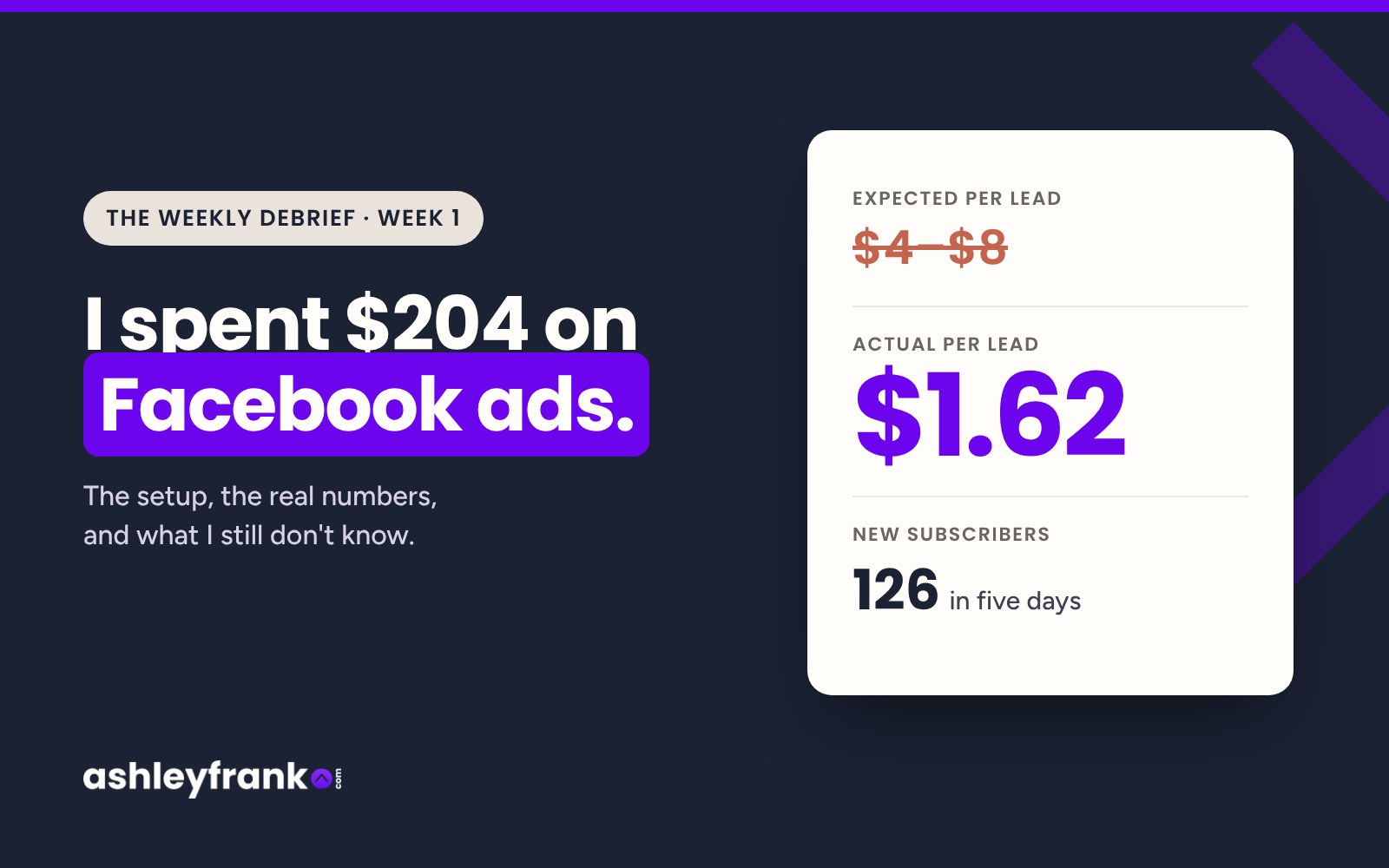
Going in, I expected to pay somewhere between $4 and $8 per lead. That’s a pretty normal range for this kind of ad, and I’d have been happy with anything in it.
The Meta setup
Here’s how I built the experiment:
- One campaign on Facebook and Instagram, with a lead form right inside the ad, so people can grab the guide without leaving the app.
- Three ad sets, each aimed at a different group: entrepreneurs and business owners, coaches, and consultants and advisors.
- Each ad set had 5 ad creatives and copy.
- $12 a day per ad set, or $36 a day in total.
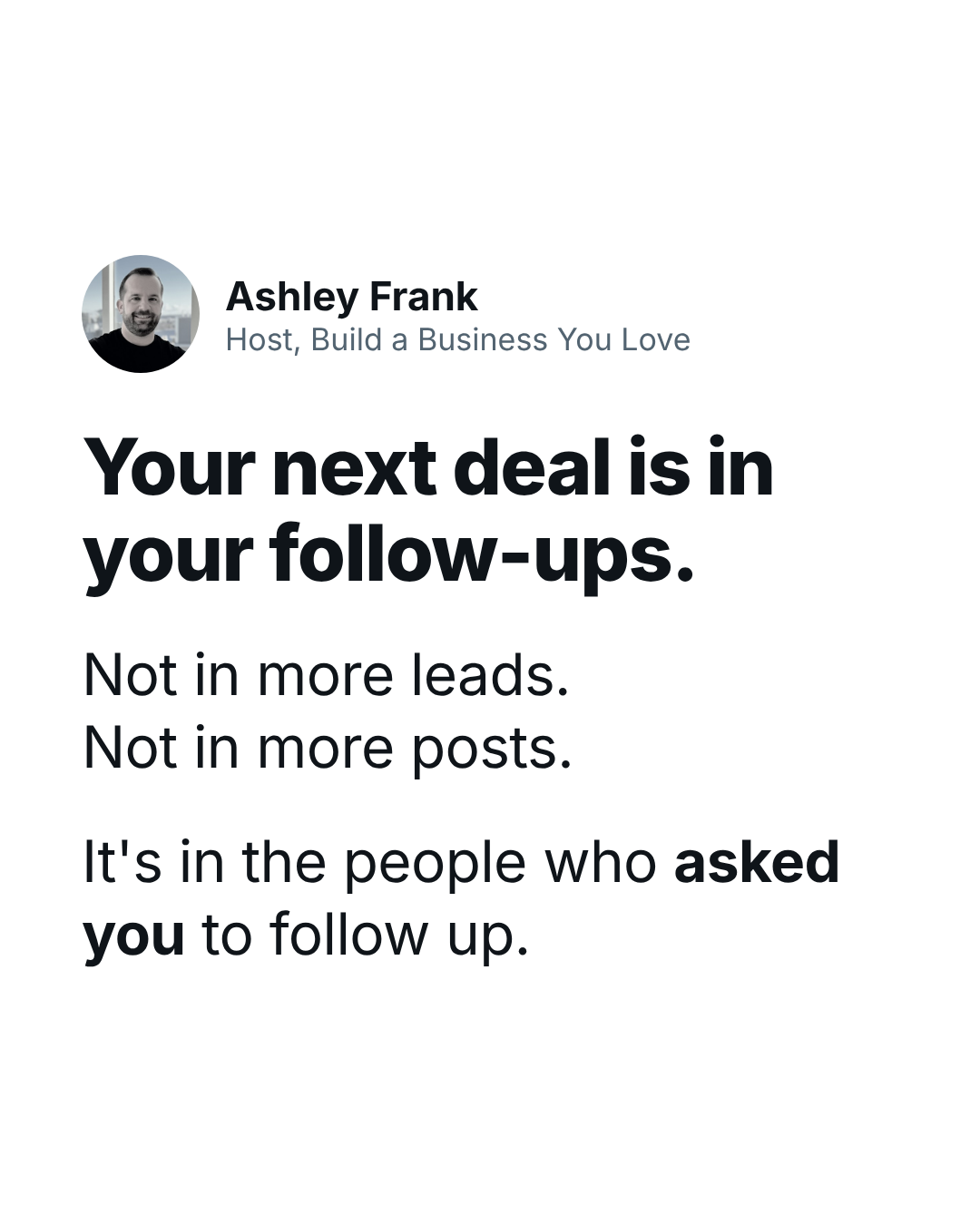
Above is an example of the ad creative used for this campaign.
Behind the scenes, I created a workflow in my SalesGuide.app CRM, which is powered by GoHighLevel, which did the following.
- When someone filled in the form, they were automatically added to my contacts and tagged.
- They got an email straight away with the guide.
- Then they went into a short three-day email sequence:
- Day 1: “Did you send a follow-up yet?”
- Day 2: a real client example
- Day 3: an invitation to my Confident Closer Challenge
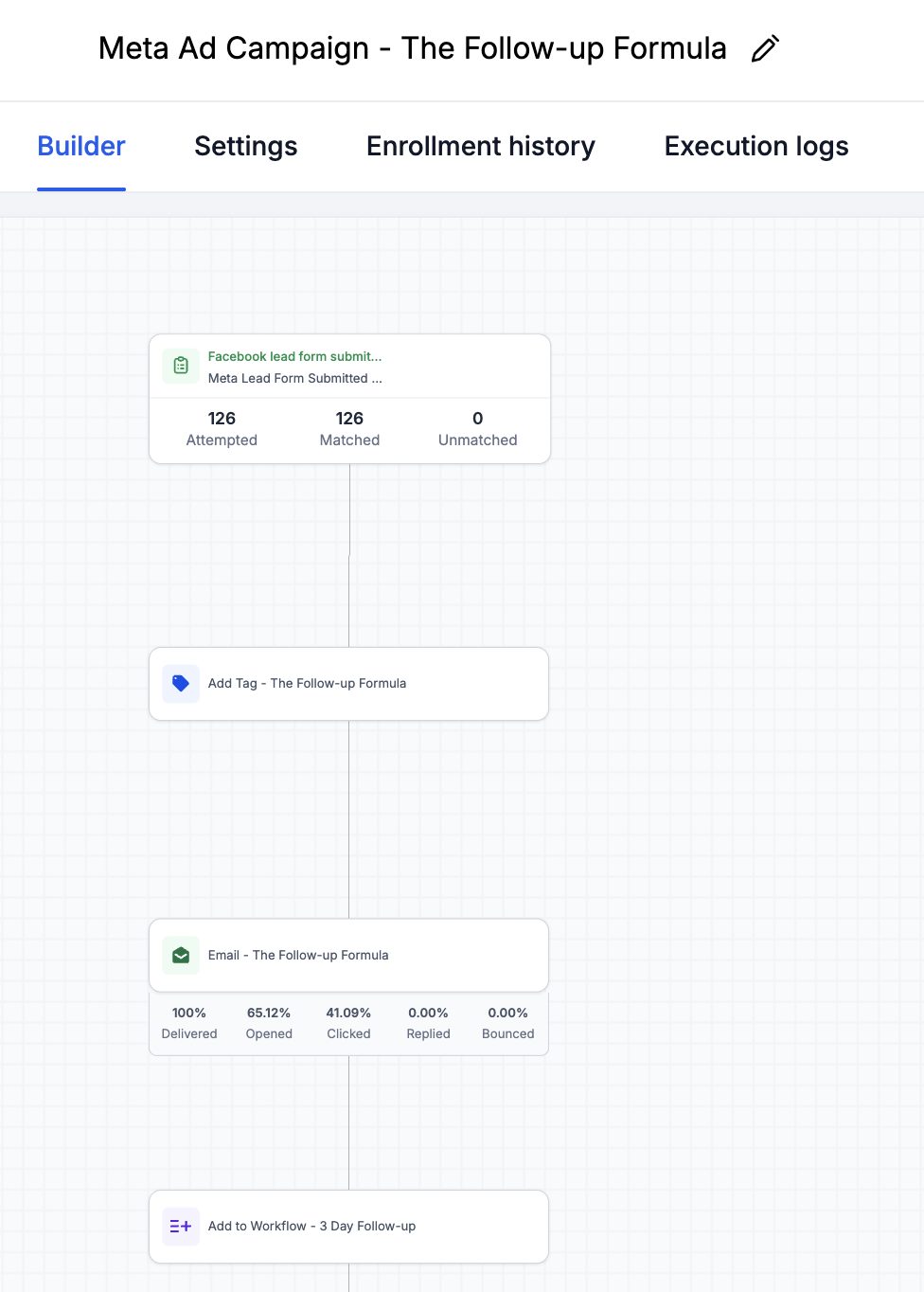
Above is a screenshot showing part of the workflow I built inside my SalesGuide.app
What actually happened
After five days, here’s the reality:
| Week one | |
|---|---|
| Spent | $203.82 |
| People reached | about 7,000 |
| New leads | 126 |
| Average cost per lead | about $1.62 |
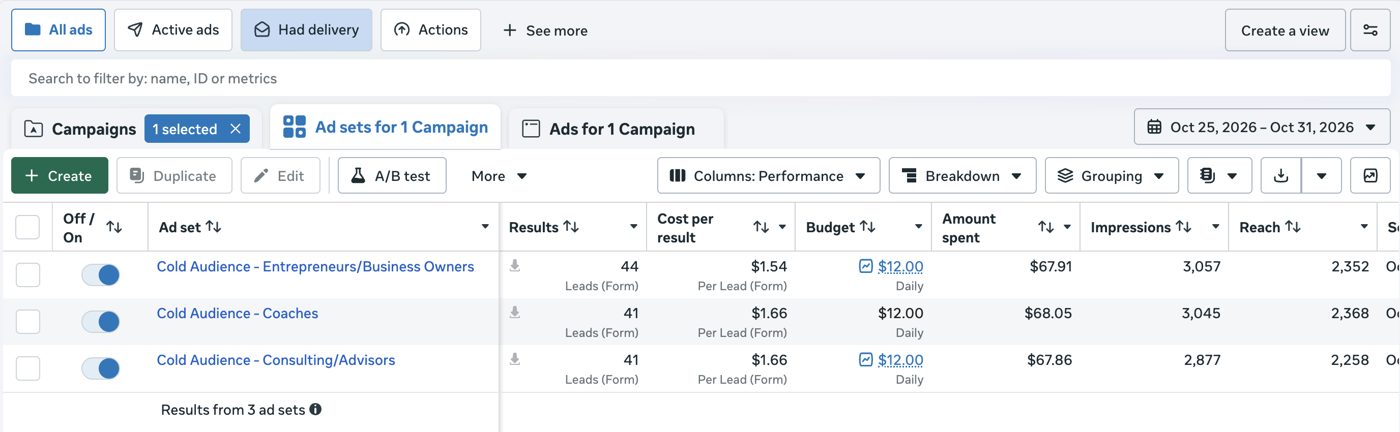
So instead of $4 to $8 a lead, I’m paying well under $2. Honestly, that surprised me.
Here’s how the three groups compared:
| Audience | Leads | Cost per lead |
|---|---|---|
| Entrepreneurs / business owners | 44 | $1.54 |
| Coaches | 41 | $1.66 |
| Consultants / advisors | 41 | $1.66 |
They’re so close that I’m not reading much into the difference yet. What I am noticing is who’s responding:
- 84% are women, at $1.47 a lead, compared with $2.60 for men.
- Almost everyone is between 35 and 64, with the biggest group between 45 and 54.
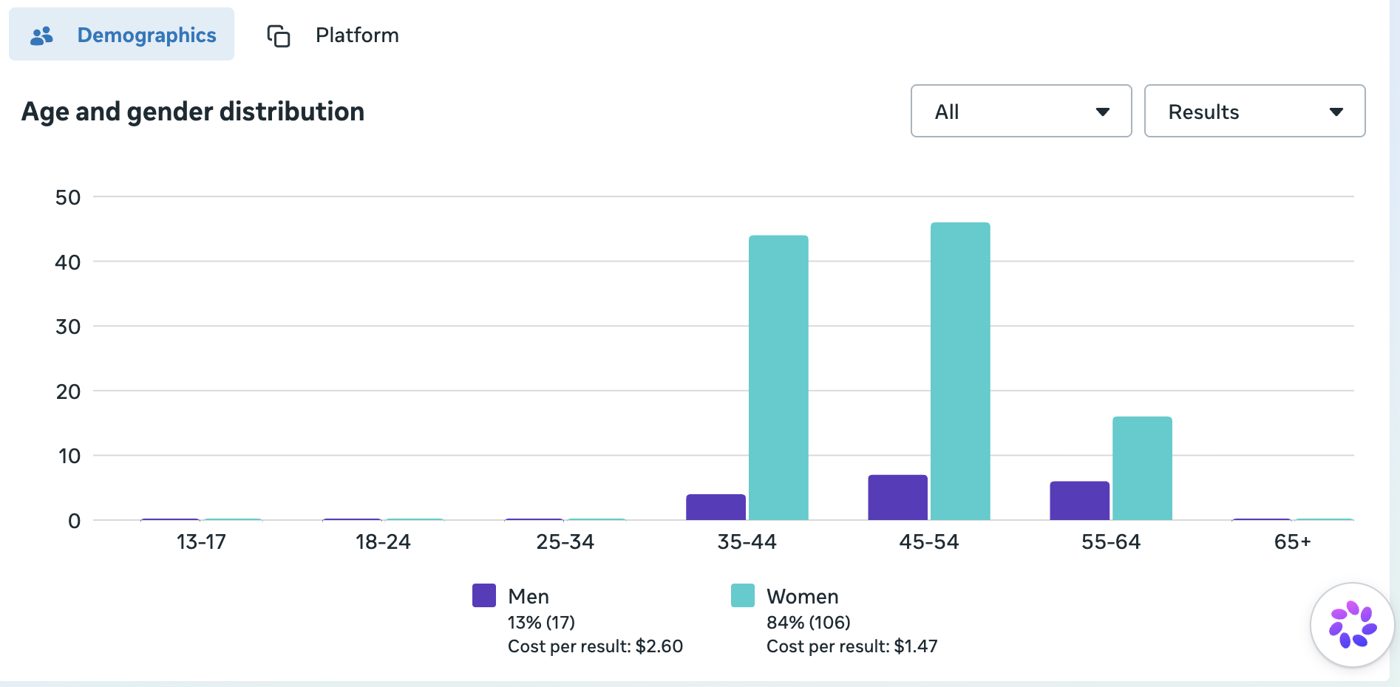
That’s useful. It tells me who’s raising their hand, and it’ll shape how I talk to people from here.
If your follow-up keeps slipping through the cracks, you’re not alone. That’s exactly why 126 people grabbed The Follow-Up Formula this week: seven ready-to-use follow-up messages so you always know what to say next. Download it free →
What happened after they downloaded
Getting a lead onto your email list is only the first step. Next, you want to see whether they follow the journey.
An online offer is a well-built system that takes someone from awareness (“hmm, this is me”) to consideration (“they get me”) to decision (“I want this”). Every step of the customer journey goes through that process. Sometimes it’s fast, like downloading a freebie. Sometimes it takes longer, like deciding to buy.
For this phase, I’m inviting new leads to sign up for my free three-day challenge.
| Opened | Clicked | |
|---|---|---|
| The Follow-Up Formula (guide delivery) | 65% | 41% |
| Day 1: “Did you send a follow-up yet?” | 36% | 5% |
| Day 2: Client example | 32% | 0% |
| Day 3: Challenge invitation | 52% | 0% |
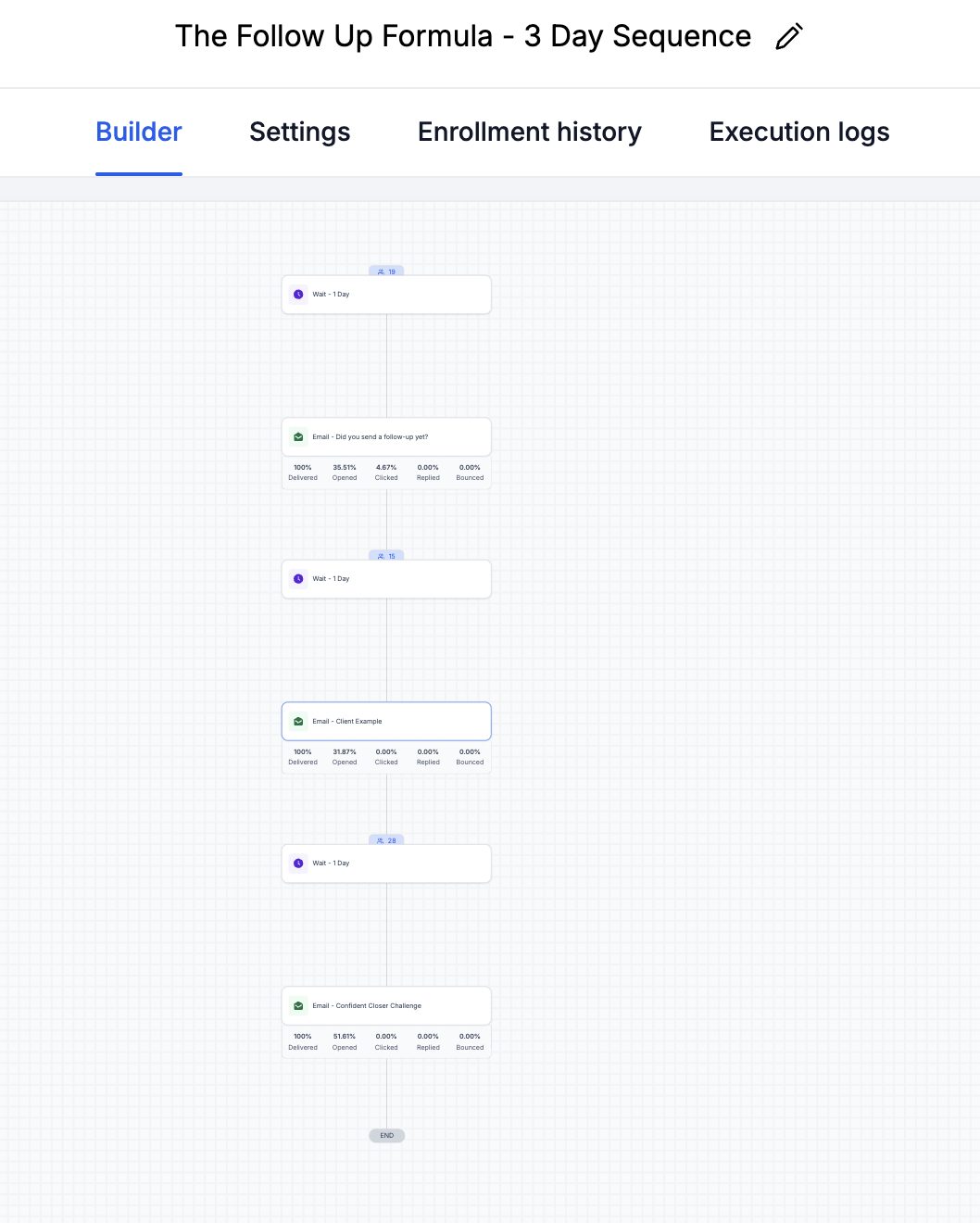
The first email, with the guide, was strong: 65% opened it and 41% clicked through. That tells me most of these people weren’t just grabbing something free and disappearing. The emails after that got smaller numbers, which is normal. Opens dipped on days one and two, then picked up again for the challenge invitation.
But at the end of day five, nobody had registered for the challenge yet. Honestly, I’m not surprised. I haven’t given these people much reason to trust me yet, and I’m asking for three hours of their time.
So now I’ll use the data to improve the campaign and see if I can get people to sign up. I’d never expect everyone to join, but a 10 to 20% sign-up rate would be healthy.
Week one findings
The goal for week one was simple: find out whether I could get people to join my email list with The Follow-Up Formula for under $8 a lead. At $1.62 a lead and 126 shiny new subscribers, I’m calling week one of this experiment a success.
What I don’t know… yet
Here’s the big question with any free download: are these people ready to engage, or are they just freebie seekers?
I don’t know yet. The early signs are encouraging, because people are opening what I send. But opening an email isn’t the same as starting a conversation, and five days and 126 people is still too small a sample to draw real conclusions.
That’s why I’m calling it an experiment. And yes, I’m the mad scientist.
What’s next
Getting people in the door was step one. ✅
Step two is seeing whether they’ll take the next step with me: joining the Confident Closer Challenge on November 17 to 19.
That’s a bigger ask than “download a free guide.” It means joining me for an hour a day, three days in a row, to build the foundations of their follow-up system.
I’ll be honest: I haven’t done a great job yet of showing these people why I’m the right person to help, or why the challenge is worth their time. That’s the experiment for the coming week.
Here’s my plan:
- Introduce myself. Send a short video email that answers “why me?” and invites people to the challenge.
- Teach something useful. Send a second video, likely on moving from winging it to consistent sales, with another invitation.
- Run a retargeting ad. Start a Meta ad that reminds people who saw my first ad to join the challenge.
Something I’m considering: switching from a three-day challenge to a one-hour masterclass. It’s a smaller commitment for people, and something I can run more often. Come back next week to see what I decide.
In the meantime, I’ll keep the original campaign running at $36 a day. The goal is to keep adding leads at under $2 each while I figure out what’s stopping the next step. Is it low-intent leads? My warm-up emails? Something else?
It’s all part of the experiment.
If you’re thinking about ads
Here’s what I’d tell you after week one:
- Get your messaging clear first. This is the part that made the difference.
- Know what you’re giving people, and make sure it’s actually useful.
- Set up your follow-up before you turn the ads on. Leads that go nowhere are just money spent.
- Decide what you’ll measure beyond cost per lead. Cheap leads are nice. Engaged people are the point.
- Give it time. One week is a start, not an answer.
Want the same guide everyone’s downloading? Get The Follow-Up Formula.